
Hongdae Travel Guide 2026
Hongdae works best when you plan it as a neighborhood, not a checklist. Start with Yeonnam or the busier Hongdae core, then build the day around shopping, food, performances and the kind of evening you actually want.
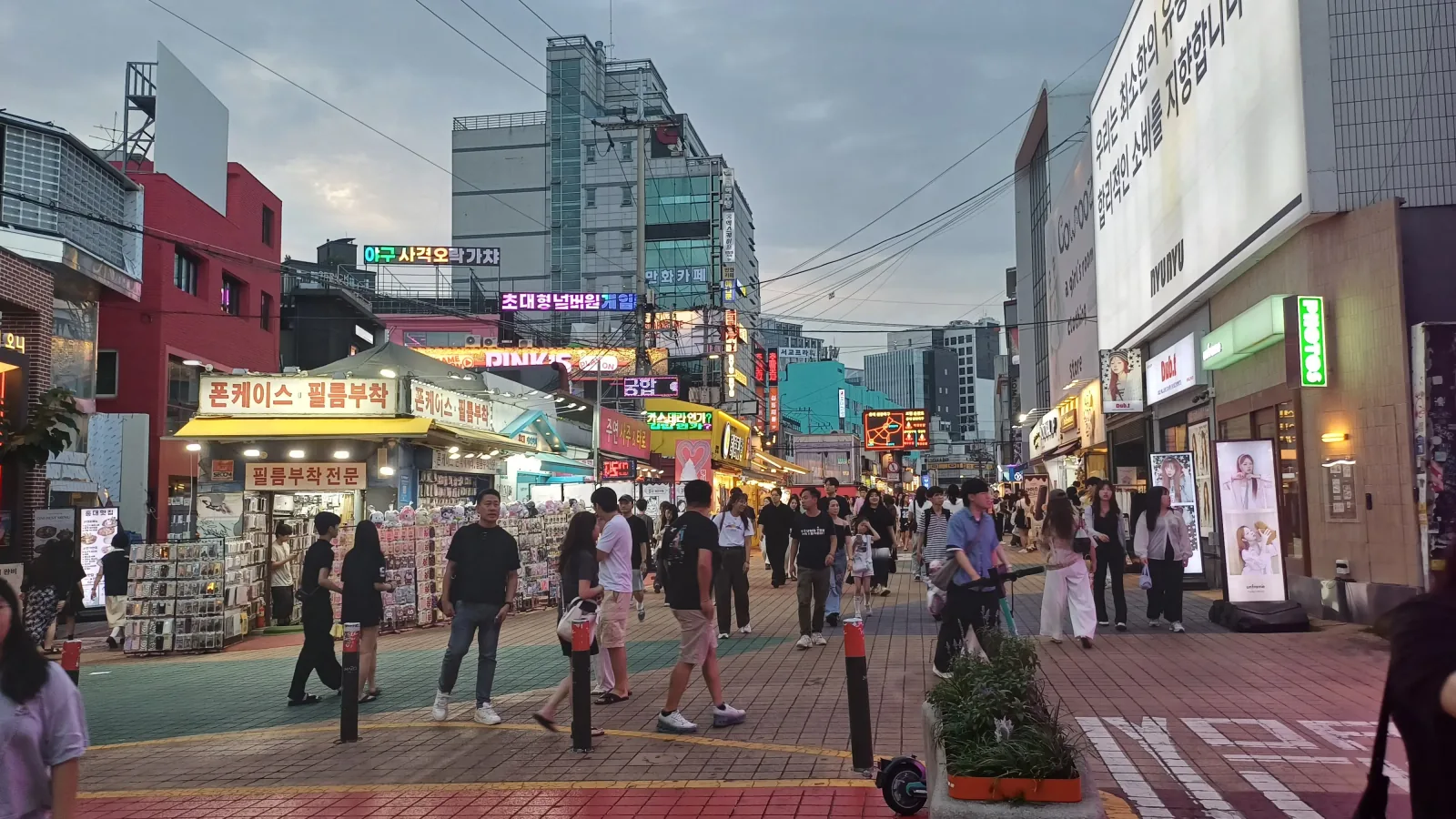
Why Travelers Actually Choose Hongdae
Hongdae is easy to misunderstand before you arrive.
One version of the neighborhood is all clubs, drinking and students. Another version is simply “the Seoul neighborhood with a direct airport train.” Both descriptions are true, and both leave out most of the reason the area works for travelers.
Hongdae becomes useful when several smaller needs overlap.
You can spend the afternoon walking through Yeonnam, stop without planning ahead for coffee or shopping, move into busier streets for dinner, and still have choices after the meal. Busking, live music, karaoke, photo booths, late cafés and shopping mean the neighborhood does not suddenly stop being useful when the main sightseeing day is over.
That matters more if you are staying here.
A palace or museum gives you a reason to visit once. Hongdae can give you something to do on several different evenings without requiring another full itinerary. You might spend one afternoon here properly, then use the neighborhood differently after returning from central Seoul on the next two nights.
The airport connection is part of the appeal, but it should not make the decision by itself. If most of your mornings start early around Jongno, the palaces and central Seoul, and you normally finish the day early, Hongdae loses some of its advantage. In that case, visiting for one afternoon and evening may make more sense than sleeping here.
Hongdae earns the stay when you will actually use the hours after dinner.
That is the difference.
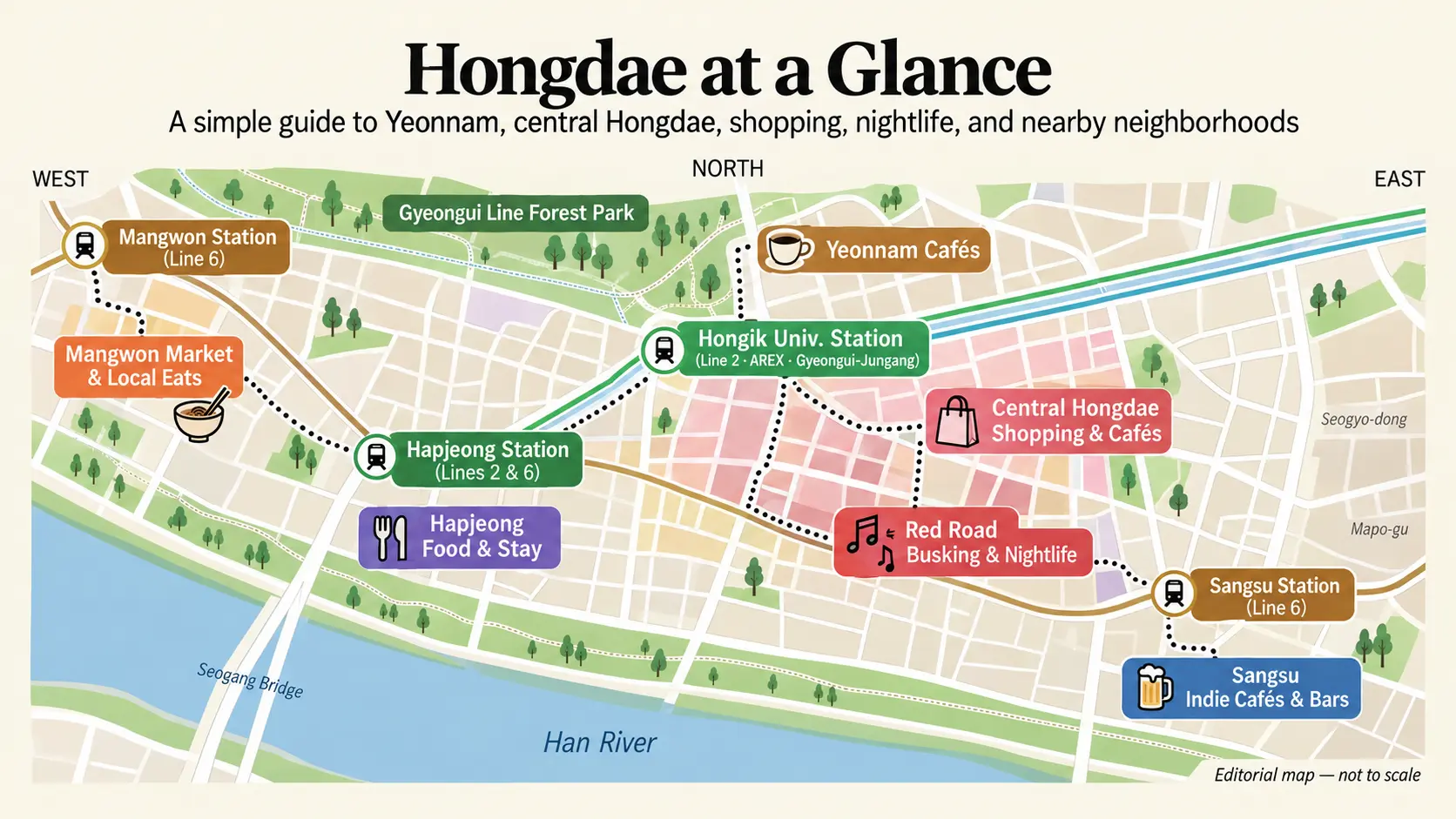
Where to Start: Exit 3 or Exit 9?
Start at Exit 3 if you want the easier introduction
For a first visit, Korea Inside's default is the Yeonnam side around Exit 3.
This puts Gyeongui Line Forest Park into the beginning of the route rather than dropping you straight into the busiest commercial streets. You can walk first, look through the smaller streets, stop for coffee if you want it, and then move toward central Hongdae as the afternoon gets later.
It works particularly well for couples, solo travelers, café-focused visitors and anyone who is unsure whether the louder side of Hongdae is really for them.
You are not avoiding Hongdae.
You are approaching it in a better order.
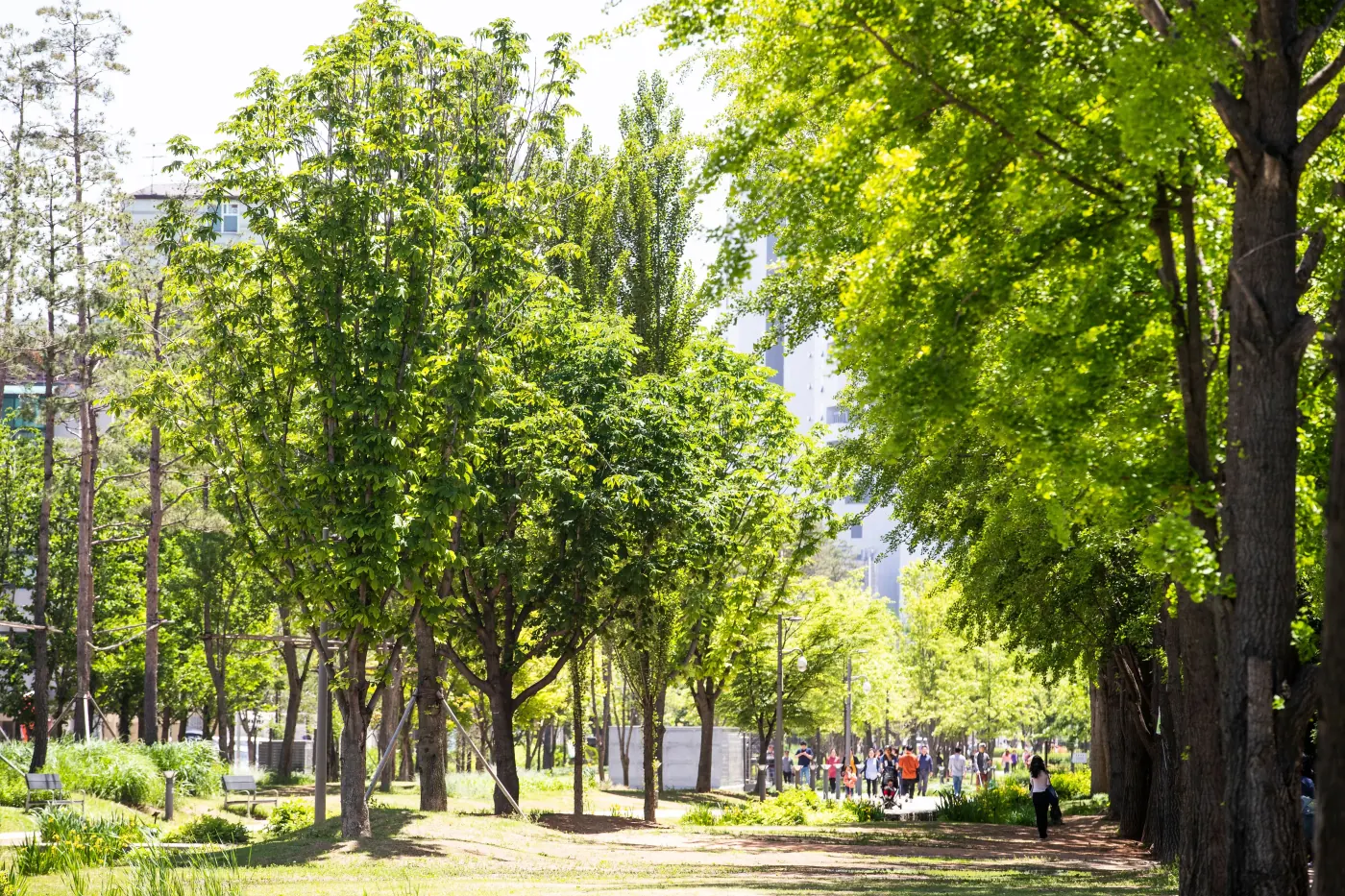
Photo: Korea Tourism Organization / Lee Beom-su
Start at Exit 9 if the busy part is the reason you came
If your priority is Red Road, shopping, character goods, K-pop merchandise or the central street scene, Exit 9 is the more direct start.
The R1 Red Culture Market section of Red Road begins about 220 meters from Hongik University Station Exit 9. Red Road itself extends for roughly 2 km through themed sections, so it should be treated as an area to move through rather than one sightseeing pin.
This is also the better start when you arrive later in the day and do not have enough time for Yeonnam first.
The practical rule
Afternoon with time to explore:
Exit 3 → Yeonnam → Gyeongui Line Forest Park → central Hongdae → dinner → Red Road
Short visit focused on shopping or evening activity:
Exit 9 → central Hongdae / Red Road → dinner → busking or whatever you have planned that night
That distinction is small on a map.
For the traveler actually walking the neighborhood, it changes the day.
Yeonnam First: How Long to Stay Before Moving Into Hongdae
Hongik University Station Exit 3 → Gyeongui Line Forest Park → Yeonnam side streets → one café → central Hongdae
Exit 3 gives you access to the calmer side of the neighborhood first.
Gyeongui Line Forest Park begins about 450 meters from Exit 3. The full park runs for 6.3 kilometers across several parts of Seoul, but that number is not useful for a Hongdae itinerary. You are not here to complete the park.
For a first visit, the Yeonnam section is enough.
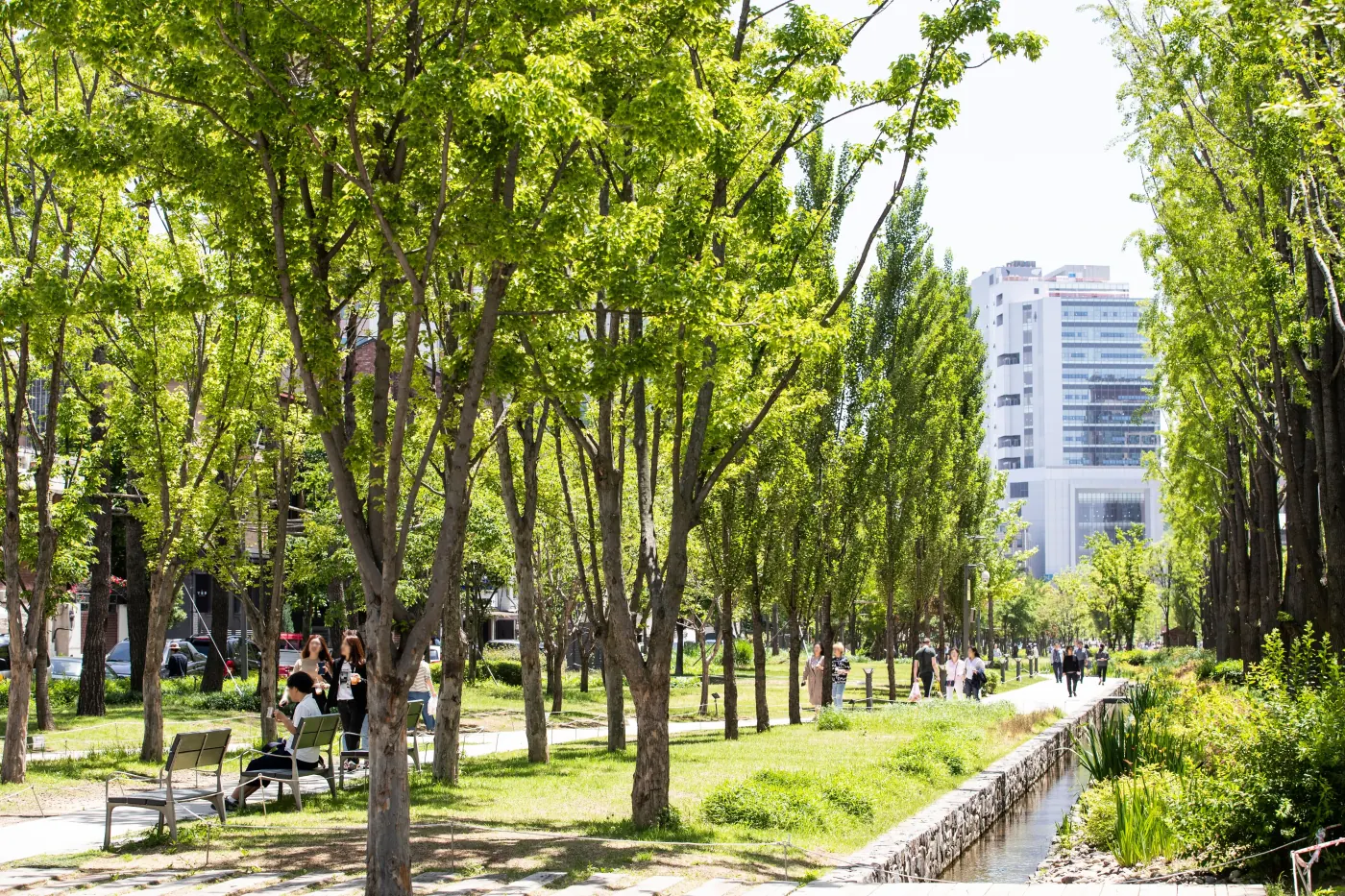
Photo: Korea Tourism Organization / Lee Beom-su
Do not turn the forest park into a long walk
The park works best as the beginning of the afternoon, not the main attraction.
Walk along it for a while, watch how the neighborhood opens around it, and leave the main path when one of the side streets looks more interesting. Cafés, bakeries, small restaurants and shops sit beyond the green corridor, so staying on the park for too long can actually mean missing Yeonnam itself.
For most first-time visitors, 20 to 30 minutes of actual park walking is enough before wandering into the surrounding streets.
If the weather is good and you enjoy slow walks, stay longer.
If it is hot, raining or you already spent the morning sightseeing on foot, shorten it.
The goal is not distance.
It is to arrive in Hongdae without starting the afternoon in its busiest streets.
Use the café as the break in the route
Yeonnam has enough cafés that searching for the single “best” one can create more work than the coffee is worth.
Unless a particular café is one of the reasons you came, walk first and choose the stop after you have been in the neighborhood for a while.
That solves two problems at once.
You get to see Yeonnam before sitting down, and the café becomes a real break before the busier part of the day rather than another destination requiring a detour.
A 45- to 60-minute café stop is usually enough for a first-time Hongdae route.
If cafés are one of your main Seoul interests, ignore that rule and give Yeonnam more time. In that case, the café streets are the activity rather than the break.
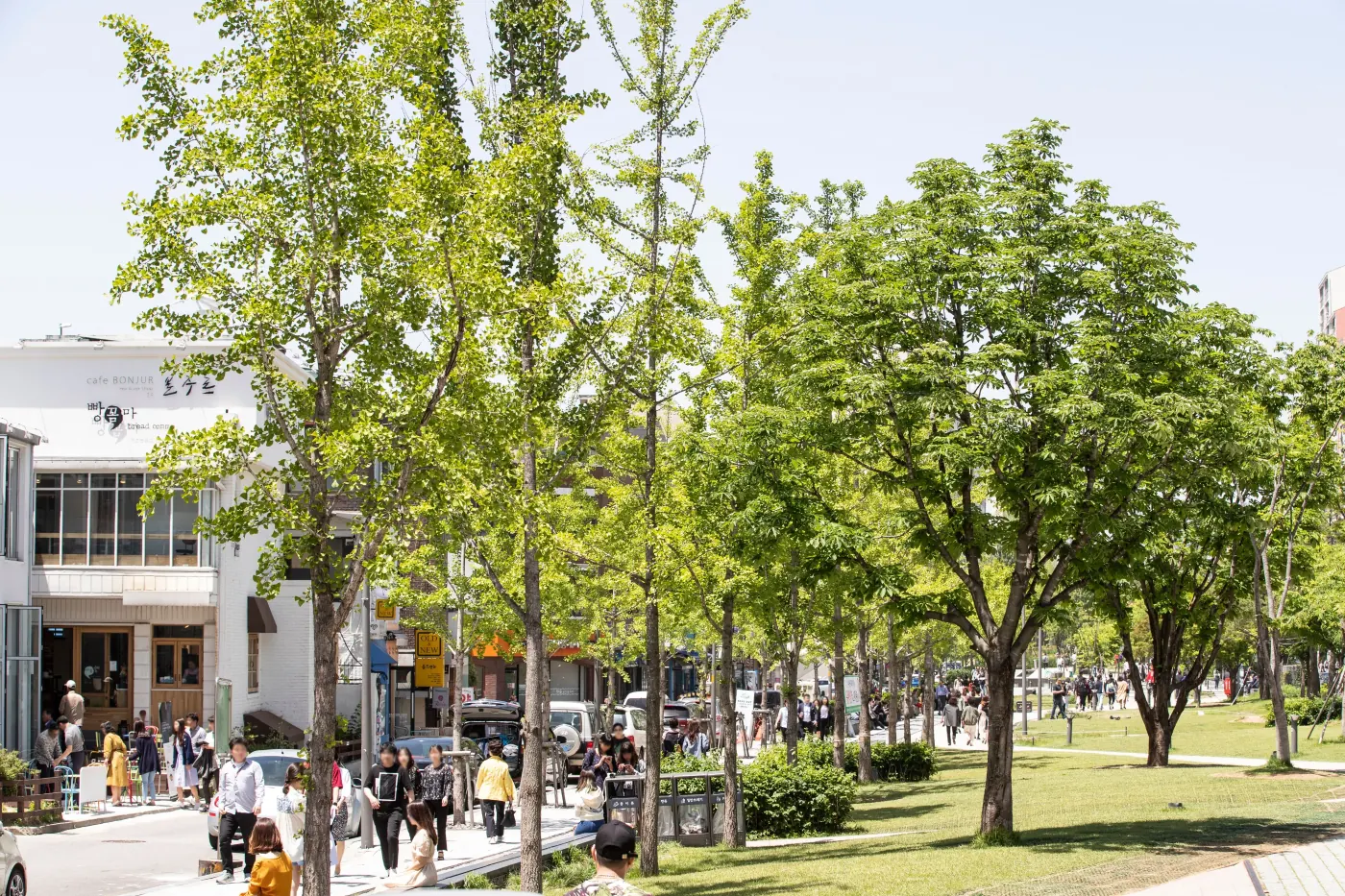
Photo: Korea Tourism Organization / Lee Beom-su
Give Yeonnam roughly two to two and a half hours
For a general first visit, a useful working range is:
park walk + side streets + one café = about two to two and a half hours
That is not a reservation schedule.
It is a guardrail.
Without one, Yeonnam can quietly consume the whole afternoon. That may be exactly what you want, but it leaves less time for the part of Hongdae that changes most toward the evening.
If you start around 2 or 3 p.m., this rhythm naturally moves you toward central Hongdae in the late afternoon.
That is a better transition than arriving in the busiest streets at midday and waiting for Hongdae to feel like the Hongdae you saw online.
Know when to move on
There is no landmark telling you that Yeonnam is finished.
Move on when one of three things happens: you have had your café break, the streets begin to feel repetitive, or you are ready to shop and eat.
Head back toward the Hongik University Station side and continue into central Hongdae.
The change is noticeable.
The streets get busier. Shopping becomes more prominent. K-pop and character goods, photo booths, beauty stores and temporary pop-ups take a larger share of your attention.
That change of pace is why the two areas work better together than separately.
Yeonnam gives the afternoon room.
Central Hongdae gives it momentum.
A realistic afternoon
If you want a simple clock to plan around, use this as a starting point rather than a timetable:
2:00–2:15 p.m. — Exit 3 and orient yourself
2:15–2:45 p.m. — Gyeongui Line Forest Park
2:45–3:30 p.m. — Yeonnam side streets
3:30–4:30 p.m. — café or bakery break
around 4:30–5:00 p.m. — begin moving toward central Hongdae
after 5:00 p.m. — shopping, pop-ups and the busier street scene
dinner onward — Red Road, busking or whatever kind of evening you actually want
Do not worry if you are an hour ahead or behind.
The important part is the sequence.
Slow first. Busier later.
Central Hongdae: Shop by Interest, Not by Store Count
Yeonnam → choose your shopping priority → one pop-up or photo booth if it interests you → dinner → Red Road
Coming out of Yeonnam, central Hongdae can feel like someone suddenly turned up the volume.
The streets are busier, storefronts compete for attention, and it becomes easy to spend the next two hours entering places simply because everyone else is entering them.
Do not start that way.
Before you begin shopping, decide what you actually came to look for.
Choose K-pop or fashion first
If K-pop, character goods or albums are the priority, use one of the station-side stores as an anchor.
WITHMUU inside AK Plaza currently carries official albums, merchandise and light sticks, with a small experience component as well. K-Pop Square Hongdae, near Exit 1, operates as a specialized K-pop space with merchandise, exhibitions and rotating pop-ups.
You do not need to visit both just because both exist.
If one carries the artist, character or event you actually care about, start there. If neither does, keep walking.
For fashion and cosmetics, move toward the R3 area near Exit 9. This is one of Hongdae's denser fashion and shopping zones, with clothing, cosmetics and trend-driven stores concentrated in the area.
Give yourself a shopping block rather than a store checklist.
About 60 to 90 minutes is a useful first pass for a traveler who also wants dinner and the evening side of Hongdae.
If shopping is one of the main reasons you came to Seoul, stay longer.
If not, leave before shopping bags become the itinerary.
Treat pop-ups as temporary, not guaranteed attractions
Hongdae pop-ups are worth checking because they change what is available during your exact travel dates.
They are also one of the fastest ways for an old travel guide to become wrong.
A K-pop, character, fashion or collaboration event you saw several months ago may already be gone. Another may require advance booking, a same-day waiting system or timed entry. A 2026 K-Pop Square event, for example, separated advance-reservation entry from later on-site waiting.
So do not build the evergreen itinerary around a specific pop-up.
Instead, use this rule:
Check current events shortly before the trip. Add one only if it matches something you already care about.
If you are a fan of the artist or IP, rearranging an hour may be worthwhile.
If you are not, a long line for limited merchandise is probably not a better use of Hongdae than the neighborhood itself.
A viral queue is not automatically an attraction.
Use the photo booth when it fits the walk
Four-cut photo booths are common enough around Hongdae, Yeonnam, Sangsu and Hapjeong that there is little reason to cross the neighborhood for a random one.
Dozens of Life4Cuts, Photoism, Haru Film, Photogray and other photo-booth branches operate across the wider Hongdae area in 2026.
For most travelers, the practical approach is simple.
See one you like, check the frame or backdrop, and go in.
If a specific K-pop collaboration frame matters to you, then search for the participating brand or branch first. Otherwise, treat the booth as a 10- to 20-minute break in the shopping route, not another destination requiring a subway plan.
It works particularly well with friends or as a couple because you leave with something physical from an otherwise very digital day.
Solo travelers do not need to skip it either. The booths are self-operated; the decision is whether you actually want the photo, not whether you have a group.
Do not let your shopping bags control the evening
This becomes a real problem faster than people expect.
Albums, character goods, cosmetics and clothes are easy to buy one item at a time. After several stores, you are carrying the result through dinner, busking and whatever you planned for the night.
If you are staying in Hongdae and your hotel is reasonably close, dropping purchases before the evening can be worth the detour.
If you are visiting from another neighborhood, set a stopping point.
Do not keep shopping because the next store might have something better and then discover that you are tired of Hongdae before the part of the day you came to see.
Shopping should feed the day.
It should not end it.
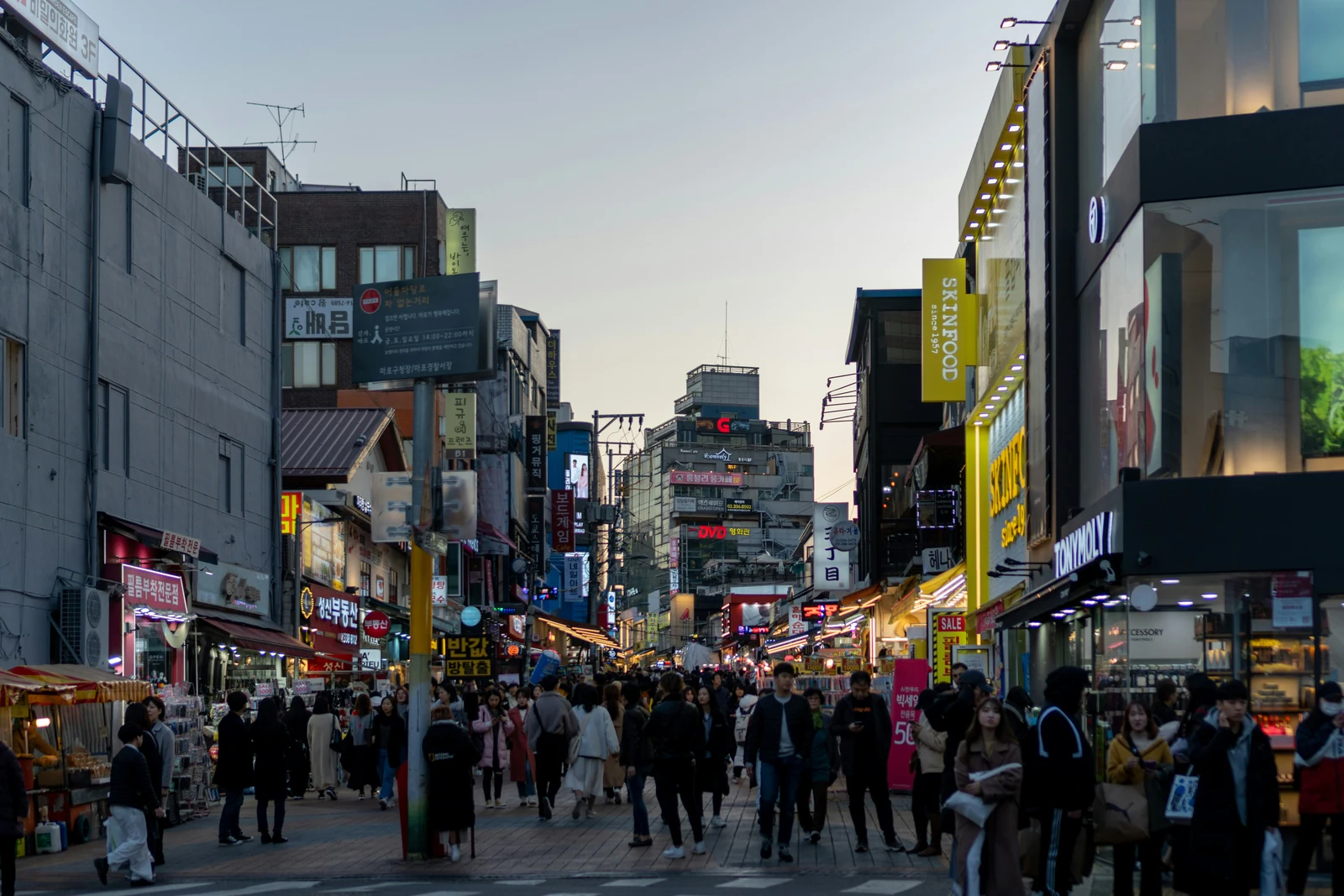
Photo: Unsplash / patrick
Move to dinner before you start the night
If you followed the Yeonnam route and reached central Hongdae around 5 p.m., a realistic transition looks something like this:
5:00–6:15 p.m. — fashion, K-pop, character or beauty shopping
optional 15–30 minutes — pop-up or photo booth
around 6:30–8:00 p.m. — dinner
after dinner — Red Road, busking, live music, karaoke, bars or a late café
Again, this is not a reservation schedule.
It is a way to stop the shopping part of Hongdae from swallowing the evening.
And if you see something more interesting while walking, change the plan.
That flexibility is one of the reasons to spend time here in the first place.
What to Eat Around Hongdae: Match the Meal to the Day
Mangwon for food exploration → Yeonnam for a café break → central Hongdae for dinner → keep late food flexible
Hongdae has enough restaurants that choosing where to eat can become another form of itinerary overload.
Do not start with a list of famous restaurants.
Start with the meal.
Lunch, a café break, dinner with friends and food after a late performance solve different problems. They should not be planned the same way.
Use Mangwon when lunch itself is part of the activity
If you want to try several Korean foods rather than sit down for one large meal, Mangwon Market makes more sense as a lunch stop than as a quick detour after dinner.
The useful way to eat there is to share.
Dakgangjeong, croquettes, tteokgalbi and smaller market snacks let a couple or group try several things without committing to one restaurant immediately.
Do not buy everything that looks good in the first five minutes.
Start with one or two items, walk farther into the market, then decide whether you are still hungry.
That sounds obvious until the first fried snack, sweet drink and chicken cup have already become lunch.
If the weather is comfortable, takeaway food can also continue toward Mangwon Hangang Park.
If it is raining, extremely hot or your group is already tired, keep the market as the destination and skip the river.
Mangwon works because the food can be the activity.
You do not need to turn it into a checklist of famous stalls.
Keep the Yeonnam café separate from lunch
If you followed the earlier Yeonnam route, the café is primarily a break.
Treat it that way unless cafés are one of the main reasons you came to Seoul.
A heavy lunch followed immediately by a large dessert café can slow the whole afternoon before you ever reach central Hongdae.
Coffee, a pastry or one dessert to share is enough for many travelers.
You can always eat again later.
Hongdae is not a neighborhood where your next food option is difficult to find.
Make dinner the anchor for couples and groups
Central Hongdae is a good place to make dinner part of the evening rather than something you squeeze between shops.
For couples or groups, Korean barbecue and dakgalbi work particularly well because the meal is shared and naturally takes time.
Fried chicken works when you want something more casual or when the evening plan matters more than dinner itself.
The right choice depends on what happens afterward.
If you want Red Road, busking or live music, do not cross the neighborhood for a restaurant simply because it appeared on a viral list.
Eat somewhere that keeps you near the part of Hongdae you intend to use after dinner.
A restaurant can be excellent and still be the wrong restaurant for the itinerary.
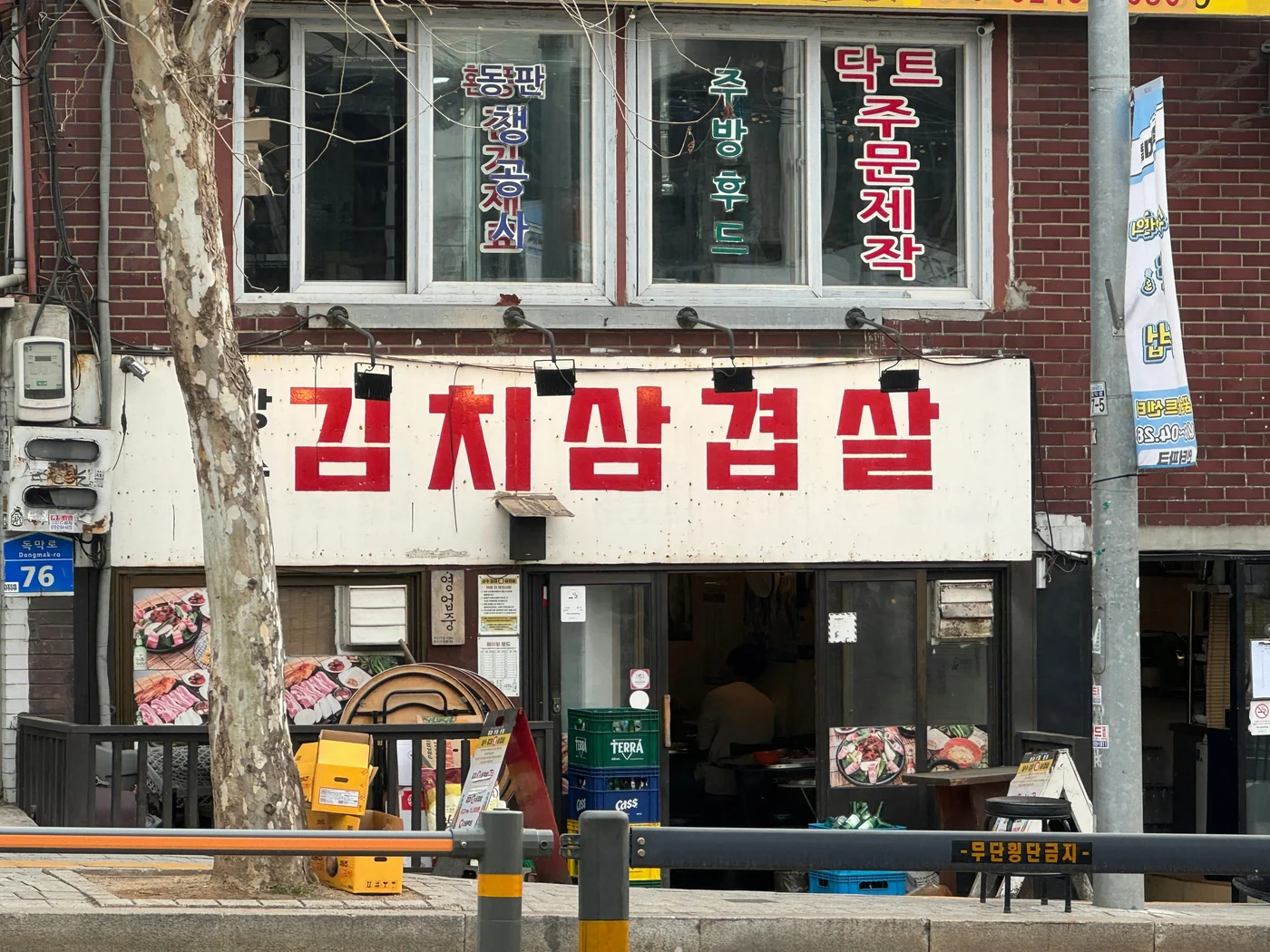
Photo: Unsplash / suzi-kim
Solo travelers should check the ordering rule before sitting down
Hongdae has plenty of food for solo travelers.
The difficulty is not eating alone.
It is choosing a dish that some restaurants expect people to share.
Korean barbecue, dakgalbi, gopchang and similar grill or pan dishes may have a minimum order even when the menu shows a price for one serving. Some restaurants accept one person if the minimum quantity is ordered; others may not take a solo table, particularly when busy.
Check before you settle in.
If the restaurant does not work for one, move on rather than treating it as a failed food mission.
One-person meals are much easier.
Soups, stews, noodles, rice dishes, kimbap and other single-bowl or single-tray meals usually fit a solo day more naturally.
If barbecue itself is important to you, look specifically for a restaurant that accepts solo diners rather than assuming every barbecue restaurant in Hongdae will.
The goal is to eat well.
It is not to win an argument with a minimum-order policy.
Do not spend your whole Seoul food budget in Hongdae
Hongdae is convenient, but convenience is not a reason to eat every Seoul meal here.
If you are staying in the neighborhood, use that convenience for breakfast, an unplanned dinner or late food after returning from another part of the city.
Save other meals for the places you are already visiting.
A palace and Jongno day can include food in Jongno.
An Euljiro evening can stay in Euljiro.
A Mangwon day should use Mangwon.
Crossing Seoul back to Hongdae simply because every saved restaurant is near your hotel wastes one of the advantages of having a city-wide itinerary.
Your hotel neighborhood should make meals easier.
It should not dictate all of them.
Keep late food as the decision you make later
This is one part of the day that does not need much planning.
If dinner was early because you had a class, performance or other fixed-time activity, decide afterward whether you are actually hungry.
Fried chicken, noodles, a simple late meal, dessert, convenience-store food or nothing at all can work.
Do not schedule a second famous restaurant at 10:30 p.m. simply because Hongdae stays active late.
You may be hungry.
You may also be tired and carrying three shopping bags.
Leave yourself the choice.
A practical food rhythm for a Hongdae day
If Hongdae itself is the main afternoon and evening plan, a realistic pattern is:
Lunch elsewhere or a light lunch
→ Yeonnam café during the afternoon
→ central Hongdae dinner around the transition into evening
→ Red Road / live music / karaoke / bars
→ late food only if you still want it
For a Hongdae + Mangwon full day, change the first half:
Mangwon Market lunch
→ Mangwon / river if weather allows
→ Hapjeong or Sangsu
→ central Hongdae
→ later dinner or a lighter evening meal
Do not force both routes into the same day simply because they are all in western Seoul.
The useful food plan is the one that leaves you hungry at the right time.
Paid Experiences in Hongdae: Book One Only If It Changes the Day
K-pop dance / perfume / ring making / other workshops → choose one interest → reserve the time → build the rest of Hongdae around it
Hongdae has enough bookable activities that it is easy to turn a flexible neighborhood day into a schedule of appointments.
Do not do that.
A paid experience earns its place when it gives you something you could not get by simply walking, shopping or eating around Hongdae.
For most first-time visitors, one booked activity is enough.
K-pop dance is worth booking when you want to participate, not just watch
If K-pop is one of the reasons you came to Seoul, a dance class has a clearer reason to exist than another hour spent buying merchandise.
Current Hongdae classes include English-guided options of around 90 minutes, with both small-group and private formats. Some are explicitly beginner-friendly, so previous dance experience is not automatically required.
The real question is whether you want to learn the choreography yourself.
If the answer is yes, make the class the fixed point of the afternoon.
Do not shop for three hours first and then arrive tired for the activity you actually paid for.
A simple pattern works better:
Yeonnam or lunch → dance class → short break → central Hongdae shopping → dinner → evening
If the class is later, reverse the shopping and class blocks.
The fixed reservation should control the flexible part of the day, not the other way around.
Choose group or private for a reason
A join-in class makes sense when you want the activity without paying for a fully customized session.
It can also suit a solo traveler because you do not need to arrive with your own group.
Private classes become more useful when the song matters, when you are traveling with friends who want to learn together, or when different confidence levels would make a group class uncomfortable.
Current products show that private options may allow song choice while join-in classes use the scheduled choreography.
Do not pay extra for private simply because “private” sounds better.
Pay for it when the customization changes the experience.
Perfume making works when you want a quieter indoor hour
Not every Hongdae activity needs music or crowds.
Current perfume workshops in Hongdae range from guided blending sessions to more self-directed formats, generally taking around an hour to 90 minutes. English support is available at multiple current products.
This fits particularly well for:
couples who want something slower,
solo travelers who prefer a structured indoor activity,
or a rainy afternoon when walking and busking are less attractive.
The reason to book it is not that perfume making is a “must-do Korean experience.”
It is that you want to spend part of the trip making something you will take home.
If fragrance does not interest you, skip it.
Ring making needs more time than it looks like on the booking page
A ring-making session sounds like a small add-on.
It usually is not.
Current Hongdae silver-ring experiences can take about two hours, including design choice, sizing, shaping, finishing and optional engraving or stone work.
That makes it closer to a major afternoon activity than a quick shopping break.
It works naturally for couples, friends or someone who specifically wants a handmade souvenir.
It fits badly into an already crowded half-day itinerary.
If you book a two-hour workshop, remove something else.
Do not just add it.
Check five things before paying
Before booking a class or workshop, confirm:
duration
A 90-minute activity can occupy closer to two hours once arrival, check-in and the next move are included.
language
Do not assume a Seoul activity is automatically run in English. Current Hongdae products vary from English-guided sessions to multilingual video-guided formats.
group or private
Know whether you are joining other travelers or reserving the session for your own group.
age and participation rules
Some current dance products, for example, accept children from age seven, but that should be checked for the specific product rather than generalized to every class.
cancellation and arrival conditions
These can matter more than a small price difference if the activity sits in the middle of a busy Seoul day.
Read the conditions before you build the itinerary around the reservation.
Do not book an experience just to make the itinerary look fuller
Hongdae already gives you plenty to do without a ticket.
Walking Yeonnam, browsing central Hongdae, eating, checking a pop-up, watching busking or sitting in a café can easily fill an afternoon and evening.
A paid activity should replace part of that time.
It should not sit on top of it.
If none of the current classes or workshops matches something you genuinely want to do, spend nothing and keep the day flexible.
Where a booked activity fits
For a first-time visitor who wants one experience:
Option A — K-pop focused
Yeonnam
→ K-pop dance class
→ central Hongdae shopping
→ dinner
→ Red Road / evening
Option B — couple / craft focused
Yeonnam
→ café
→ ring or perfume workshop
→ dinner
→ busking / live music / late café
Option C — rainy day
indoor shopping
→ workshop or dance class
→ dinner
→ karaoke / café
Choose the version that changes the day in a way you actually care about.
Then book that one.
Hongdae After Dinner: Choose How Far You Want the Night to Go
dinner → check Red Road → choose street performance, live music, karaoke or a bar → keep going only if you still want to
Hongdae does not suddenly become a club district after dinner.
What changes is the number of choices.
You can stand outside and watch a performance, buy another coffee, hear live music, sing karaoke, move into a bar, or keep going much later. None of those choices is required to have a proper Hongdae night.
That is why the useful question after dinner is not:
“Where is the nightlife?”
It is:
“How much more night do I actually want?”
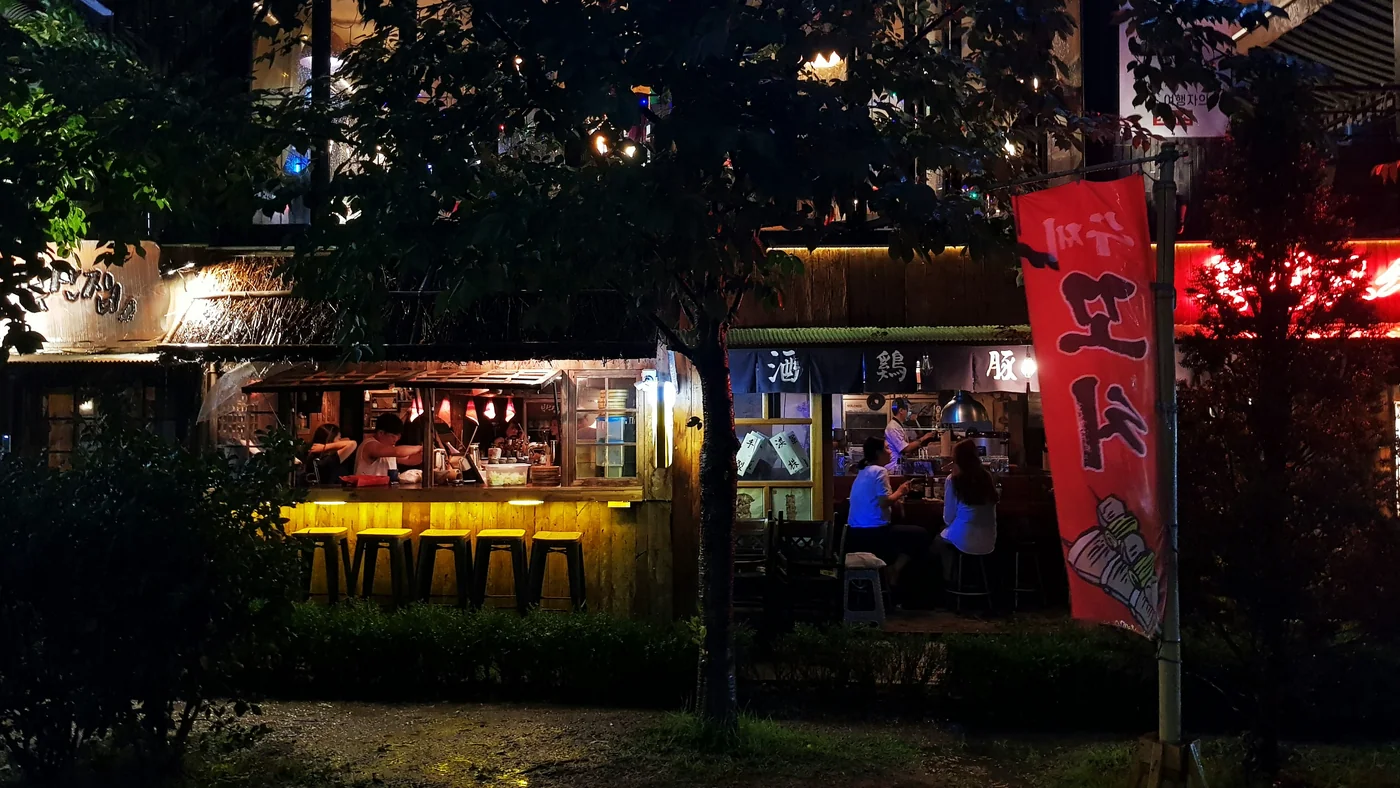
Photo: Unsplash / daesun-kim
Start outside before committing to a venue
If the weather is reasonable, begin with Red Road.
That keeps the first part of the evening flexible.
The R2 area is an established busking street rather than a single performance stage. Registered performances can include music, dance, magic and mime.
You do not need a ticket and you do not need to know exactly what you want to see before arriving.
Walk first.
If something catches your attention, stop.
If nothing does, keep moving.
This is one of the easiest ways to experience Hongdae at night without committing the rest of the evening to nightlife.
Treat busking as current information, not a fixed showtime
Do not plan your Seoul itinerary around a sentence such as:
“Hongdae busking starts every night at 8 p.m.”
Red Road publishes dated schedules, and individual performance zones and bands change. Weather and operating conditions can change the program as well.
On Red Road, an allowed busking window is not the same as an actual performance schedule. R4 has been organized into separate band and performance zones, and the program can differ between them. A busy street does not guarantee a show at the spot or time you choose.
The practical rule is simple:
Check the official Red Road schedule shortly before your visit.
If there is a band or performance you actually want to see, arrange dinner around it.
If there is not, do not wait an hour simply because a travel guide told you that busking is something you must experience.
The street will still be there.
Your evening can go somewhere else.
Choose live music when the performance itself matters
Live music is a different decision from busking.
Busking works because you can encounter it while walking.
A live venue deserves more planning because there may be a ticket, a start time and an artist you either care about or do not.
KT&G Sangsangmadang Hongdae, for example, operates a dedicated live hall and continues to host concerts and music programs in 2026.
That does not make it a mandatory stop.
Check the current program.
If the artist or type of music interests you, build that evening around the show.
If it does not, do not enter a venue just to say you experienced Hongdae's indie scene.
The music should be the reason.
Karaoke is the easiest way to extend the night without turning it into nightlife
For friends, couples and some families, karaoke can be the simplest answer after dinner.
It does not require you to know the local music scene, find the right club or stay out until very late.
You decide how long you want to stay, sing what you want and leave when the group has had enough.
That flexibility matters after a long Seoul day.
If everyone is tired at 10 p.m., go back to the hotel.
If the group suddenly has more energy, karaoke gives the night another hour without creating a second itinerary.
It is especially useful for travelers who want Hongdae to feel lively but have no interest in drinking or clubbing.
You can use Hongdae at night without drinking
This is the part many short Hongdae guides get wrong.
Nightlife is not the same thing as alcohol.
An evening can be:
dinner → Red Road → photo booth → dessert or café → hotel
or:
dinner → busking → live music → hotel
or:
dinner → karaoke → late food → hotel
A family with teenagers, a couple that does not drink or a solo traveler who does not want a club can still use the part of Hongdae that becomes most interesting after dinner.
The neighborhood does not require you to participate in every version of it.
Clubs and pub crawls solve a narrower problem
If clubs are genuinely part of the trip, plan for them.
But do not make them the default recommendation simply because the neighborhood is Hongdae.
A guided pub crawl can make sense for a solo traveler who specifically wants a social night and would rather join a group than choose bars and clubs alone.
It makes much less sense for:
people who do not drink,
travelers who dislike organized group nightlife,
families,
or anyone whose ideal evening ends with music, food or a café.
Staying in Hongdae changes this decision
This is one of the strongest arguments for sleeping in the neighborhood.
If your hotel is nearby, you do not have to decide at 7 p.m. how late the night will become.
You can have dinner, watch part of a performance and decide afterward whether you want another hour out.
If you are returning to Myeongdong, Jongno or another part of Seoul, the decision is different.
At some point, the trip back becomes part of the evening.
That does not make visiting Hongdae from another neighborhood difficult.
It simply means you should know when you want to leave rather than assuming the night will sort itself out.
A realistic first Hongdae evening
For someone who has already spent the afternoon in Yeonnam and central Hongdae:
around 6:30–8:00 p.m. — dinner
after dinner — walk through Red Road and check what is actually happening
Then choose one:
street performance
Stay outside and keep the evening flexible.
live music
Go when there is a specific performance worth the time or ticket.
karaoke
Use it when your group wants another activity without committing to a club.
bar or club
Choose it because that is the night you wanted, not because you think Hongdae requires it.
And if dinner was enough?
Go back to the hotel.
You have not missed Hongdae.
Mangwon, Hapjeong and Sangsu: Add Them When You Want a Different Hongdae Day
Mangwon Market → Mangridan-gil → Mangwon Hangang Park if the weather is good → Hapjeong or Sangsu → central Hongdae at night
Mangwon, Hapjeong and Sangsu belong naturally in the wider Hongdae day.
That does not mean every Hongdae visitor should add them.
If you only have three or four hours, stay with Yeonnam and central Hongdae. Adding Mangwon turns a compact neighborhood visit into a wider west-Seoul route.
Do it when you have the time to let the day change character.
Do not add Mangwon to a short Hongdae visit
Mangwon is not a small attraction sitting next to Red Road.
Once you add the market, surrounding streets and possibly the river, you have created another substantial block of the day.
That works well on a full day.
It works badly when you already have a K-pop class, several hours of shopping and an evening plan in Hongdae.
If your itinerary is already crowded, save Mangwon for another visit.
The fact that two neighborhoods fit on the same map does not mean they fit into the same afternoon.
Start at Mangwon Market when lunch is part of the experience
Mangwon Market works best when you arrive hungry enough to use it.
The market has been operating for more than four decades and remains known for affordable food and casual eating. Dakgangjeong, croquettes and other market foods are still commonly found here.
Let Mangridan-gil slow the day down after the market
Do not leave the market and immediately rush to the next major pin.
The streets around Poeun-ro give Mangwon a different rhythm from central Hongdae.
Mangridan-gil adds cafés, restaurants and small shops around the market and gives this part of west Seoul a quieter rhythm than central Hongdae. The market and surrounding streets fit naturally into the same walking block.
That makes this part useful after a busy market lunch.
Walk.
Browse if something interests you.
Stop for coffee only if you actually need the break.
You do not need another list of ten stores.
The point is that the neighborhood becomes quieter before you decide whether to continue to the river.
Add Mangwon Hangang Park only when the weather earns it
The river changes the day more than another shop does.
Mangwon Hangang Park gives you open space, walking paths and river views that central Hongdae cannot. Recreational facilities and a roughly 3.1-kilometer cycling path make it easy to extend the visit when the weather is comfortable.
That makes it a strong addition in comfortable weather.
It is a weak addition in heavy rain, oppressive summer heat, severe cold or when everyone already has tired feet.
Do not go because the itinerary says “Han River.”
Go because you want the river.
If the weather is good, the park can become the longest unstructured break of the day.
If it is not, remove it completely and move on.
Hapjeong and Sangsu are transitions, not two more attractions
This is where a full west-Seoul day can easily become overbuilt.
You do not need:
Mangwon
→ Hapjeong
→ Sangsu
→ Hongdae
to mean four separate sightseeing missions.
Hapjeong and Sangsu work better as the gradual transition back toward the denser Hongdae evening.
The wider area is connected through cafés, restaurants, books, small cultural spaces and Hongdae's indie culture. Sangsu and Hapjeong work better as part of the broader Hongdae day than as separate sightseeing missions.
So use them according to interest.
If you see a café, bookstore, small venue or restaurant you actually want, stop.
If not, keep moving.
You are not failing the itinerary by passing through.
Photo: Unsplash / suzi-kim
Do not force the river and Hongdae nightlife into the same long day
This is the real limit.
A market lunch, neighborhood browsing, a long river break, cafés, shopping, dinner, busking and late-night activity can all fit on paper.
Your feet may disagree.
This is where the route often becomes too full: Mangwon, Hongdae, shopping and the Han River can fit on a map, but the practical limit is how long you actually spend shopping, walking and stopping along the way.
So decide which half of the day matters more.
If Mangwon and the river are the priority, arrive in central Hongdae later and keep shopping short.
If Hongdae shopping, a class or nightlife is the priority, shorten Mangwon or skip the river.
Do not maximize the number of neighborhoods.
Protect the part of the day you came for.
A realistic full west-Seoul day
One useful pattern is:
11:30 a.m.–1:00 p.m. — Mangwon Market lunch
1:00–2:00 p.m. — Mangridan-gil and surrounding streets
Then choose:
good weather and enough energy
→ Mangwon Hangang Park
or:
bad weather / tired / shopping matters more
→ skip the river
After that:
Hapjeong or Sangsu → central Hongdae
Then:
shopping or one activity → dinner → Red Road / evening
Do not read those times as appointments.
The important decision is where you spend the extra two hours.
River?
Shopping?
A paid experience?
A longer evening?
You probably cannot give all four the same priority.
When this route is worth doing
Add the Mangwon extension when:
you have most of a day
food exploration matters
you want a quieter contrast to central Hongdae
the weather makes the river attractive
you prefer walking and neighborhood atmosphere to stacking attractions
Skip or shorten it when:
Hongdae itself only has half a day
you already booked a long workshop or dance class
shopping is a major priority
the weather makes the river unpleasant
someone in the group is already tired from walking
Mangwon is a good addition.
It is not an obligation.
A shorter Hongdae day can be better than a full west-Seoul route that everyone wants to end by 6 p.m.
Choose Your Hongdae Route Before You Add More Stops
Hongdae becomes harder to plan when every interesting place is treated as another stop to add.
By this point, you already have enough choices.
The useful decision is how much of western Seoul you actually want to use.
For a first visit, choose one of three versions: a short Hongdae visit, a fuller Hongdae afternoon and evening, or a west-Seoul day that starts in Mangwon.
Do not combine all three.
If you have three or four hours
Keep the route compact.
For a first visit with enough daylight, use:
Hongik University Station Exit 3 → Yeonnam → Gyeongui Line Forest Park → one café → central Hongdae
If the visit continues into the evening:
central Hongdae → dinner → Red Road
That is enough to understand the change from quieter Yeonnam to the busier center without turning the visit into a race.
If you arrive later, or if shopping and the evening streets are the main reason you came, skip Yeonnam and start closer to the core:
Exit 9 → central Hongdae → dinner → Red Road
Do not add Mangwon.
Do not add a two-hour workshop.
A short visit needs fewer decisions, not more stops.
If you have most of a day
Give Hongdae room to change as the day gets later.
Suggested timing — about 5 to 6 hours
-
2:00 PM — Hongik University Station, Exit 3
Start on the Yeonnam side rather than walking straight into central Hongdae.
-
2:10–2:40 PM — Gyeongui Line Forest Park
Use the Yeonnam section for a short walk. You do not need to follow the full 6.3 km park.
-
2:40–3:30 PM — Yeonnam streets + one café
Browse the side streets and take one proper café break rather than turning the afternoon into café-hopping.
-
3:30–3:50 PM — Walk toward central Hongdae
Move back toward the station and continue into the busier shopping streets.
-
3:50–5:50 PM — Central Hongdae
Use this block for fashion, K-pop or character goods, photo booths and whatever pop-ups are actually running during your visit.
-
5:50–7:05 PM — Dinner
Stay in the area instead of crossing Hongdae for one famous restaurant. This is also your main break before the evening.
-
After 7:05 PM — Red Road and your choice of night
Check the current performance schedule, then choose busking, live music, karaoke, a bar or a late café.
A useful first-time pattern is:
Yeonnam → forest park → café → central Hongdae → shopping or one paid experience → dinner → Red Road
After dinner, decide whether you actually want more.
Busking, live music, karaoke, a bar or simply returning to the hotel are all valid endings.
The important choice comes in the afternoon.
If you book a dance class or a longer workshop, reduce the shopping block.
If shopping is one of your main reasons for visiting, keep the activity out.
Do not spend two hours in a workshop and then try to recover the same two hours by rushing through everything else.
A reservation takes time from the day.
It does not create more of it.
If Mangwon is part of the day
Start there rather than squeezing it into the middle of Hongdae.
Suggested timing — about 10 hours
-
11:00 AM–12:30 PM — Mangwon Market
Start hungry and use the market as lunch rather than treating it as a sightseeing stop before another meal.
-
12:30–1:20 PM — Mangridan-gil
Walk the surrounding streets, browse small shops and stop for coffee only if you actually want one.
-
1:20–1:40 PM — Walk toward Mangwon Hangang Park
This is the transition from the neighborhood streets to the river.
-
1:40–3:10 PM — Mangwon Hangang Park
Slow the day down. Walk, sit by the river or eat anything you carried from the market.
-
3:10–3:40 PM — Move toward Hapjeong
Walk if you still want more time outside; use local transport if you would rather save your legs for Hongdae.
-
3:40–5:15 PM — Hapjeong and Sangsu
Browse without turning this into another checklist. If little interests you, move into Hongdae earlier.
-
5:15–5:35 PM — Continue into central Hongdae
-
5:35–6:50 PM — Dinner and a proper break
-
After 6:50 PM — Central Hongdae at night
Shop, check Red Road, watch a performance if something is actually scheduled, or move on to live music, karaoke or a café.
Use:
Mangwon Market → Mangridan-gil → Mangwon Hangang Park if the weather earns it → Hapjeong or Sangsu → central Hongdae
Then keep the Hongdae half of the day selective.
Choose shopping or an activity.
Have dinner.
See what is happening around Red Road.
If the market and river took longer than expected, that is not a problem. Shorten the evening instead of trying to recover the original schedule.
If the weather is poor, remove the river and give that time back to Hongdae.
This route should feel like one west-Seoul day, not two itineraries forced together.
The Korea Inside default for a first visit
If you do not know which version to choose, start here:
Exit 3 → Yeonnam → Gyeongui Line Forest Park → one café → central Hongdae → dinner → check Red Road
Then make one final decision.
Still have energy?
Continue with live music, karaoke, a bar or another walk.
Had enough?
Go back to the hotel.
You do not need Mangwon, a workshop, a club, five cafés and three shopping districts on the same day to make it count.
Hongdae Changes With Who You Are Traveling With
You do not need a different Hongdae itinerary for every type of traveler.
Most of the route can stay the same.
What changes is where you slow down, what you skip and how far you take the evening.
Solo travelers: keep the day flexible, but check shared-meal rules
Hongdae works well solo because very little of the neighborhood requires a group.
You can walk Yeonnam, stop in a café, shop, check a pop-up, join a group activity, watch busking or decide late whether you want live music.
That flexibility is the advantage.
The main friction appears around food and nightlife.
For shared dishes such as Korean barbecue or dakgalbi, check the minimum-order rule before sitting down. If the restaurant does not work for one person, move on. There are too many easier meals nearby to build the evening around one restaurant.
A group dance class can make more sense than a private class if you want a structured activity without paying for customization.
A guided nightlife activity can also solve a specific problem if you want to meet people and do not want to choose bars alone.
But do not book one simply because you are solo.
Being alone does not mean the evening needs to become social.
A café, street performance, live show or early return to the hotel can be just as useful.
Couples: choose one shared experience, not a full schedule of them
Hongdae suits couples particularly well when the day has room to wander.
A simple route can already work:
Yeonnam → café → central Hongdae → dinner → Red Road
If you want one planned activity, add something both of you actually care about.
A perfume workshop, ring-making session or K-pop class can give the afternoon a fixed point.
One is usually enough.
Do not turn the day into:
café reservation
→ workshop reservation
→ restaurant reservation
→ performance reservation
unless that is genuinely how you like to travel.
Hongdae is stronger when there is still time to change your mind.
If shopping matters to one person more than the other, use the café or workshop as the natural break rather than dragging both people through every store.
Families: interests matter more than the Hongdae age stereotype
Hongdae is not automatically a poor family choice.
The useful question is what the children actually enjoy and how late the family wants to stay out.
A family with teenagers interested in K-pop, character goods, shopping, photo booths and street performance may use Hongdae very differently from a family with small children that needs an early dinner and an early return.
For an easier family day, keep the route earlier:
Yeonnam → forest park → shopping or one suitable activity → early dinner → early-evening Red Road
You do not need to include clubs, bars or a late-night schedule for the neighborhood to work.
If you book a dance class or workshop, check the specific age and participation rules before paying.
With younger children, also give more weight to weather, walking distance and how easily you can stop.
The best family itinerary is usually the one with the easiest exit when everyone has had enough.
Friends: this is where Hongdae can expand too easily
A group of friends can use almost every side of Hongdae.
That is exactly why the itinerary can get out of control.
Shopping, barbecue, photo booths, K-pop activities, karaoke, busking, live music, bars and clubs can all sound reasonable when everyone is planning together.
You still have the same number of hours.
Pick the parts the group would actually miss if you removed them.
For many groups, dinner is worth making part of the evening. Shared dishes fit naturally, and karaoke can extend the night without requiring everyone to want the same bar or club.
If nightlife is important, reduce the afternoon.
Do not spend the group’s energy on six hours of shopping and then expect everyone to want a 2 a.m. finish.
If the group splits on what to do, Hongdae is one of the easier places to separate briefly and meet again for dinner.
Use that instead of forcing every person through every stop.
Do not choose Hongdae by age alone
“Young travelers should stay in Hongdae” is too crude to be useful.
A traveler in their fifties who likes cafés, live music, street activity and flexible evenings may get much more from Hongdae than a 23-year-old who wants quiet nights and early palace mornings.
The same applies to families.
Teenagers interested in K-pop may be more excited by Hongdae than adults who came to Seoul mainly for museums and traditional neighborhoods.
Use actual travel behavior:
Do you want busy evenings?
Hongdae becomes stronger.
Do cafés, shopping, K-pop or live music matter?
Hongdae becomes stronger.
Do most mornings start early in central Seoul?
Hongdae becomes less convenient as a base.
Do you want quiet nights and little interest in the neighborhood after dinner?
Visiting may make more sense than staying.
The traveler type is a clue.
The itinerary is the decision.
The simplest way to adjust the default route
Start with the same first-visit route:
Exit 3 → Yeonnam → Gyeongui Line Forest Park → one café → central Hongdae → dinner → check Red Road
Then adjust only one or two things.
Solo
Keep more free time and check one-person meal conditions.
Couple
Add one shared experience if it genuinely interests both of you.
Family
Move the day earlier and make the evening optional.
Friends
Protect energy for the part of the night the group actually wants.
You do not need four completely different itineraries.
You need the same neighborhood with different priorities.
Bad Weather in Hongdae: Change the Order, Not the Whole Day
Weather does not automatically ruin a Hongdae day.
It changes which parts deserve your time.
The useful response is not to replace the entire itinerary. Keep the parts that still work, remove the parts that depend on being outside, and stop walking simply because the original route told you to.
In rain, protect one indoor anchor
If rain is steady, do not build the day around the forest park, the river or outdoor busking.
Start with one indoor activity that gives the day structure.
That could be:
shopping → workshop or K-pop class → dinner → karaoke or café
The important part is not which activity you choose.
It is having one place where weather no longer controls the next hour.
After that, keep the rest flexible.
If the rain weakens, go outside again.
If it does not, you already have a workable day.
Yeonnam can stay, but shorten the walking
Rain does not mean you have to remove Yeonnam completely.
It does mean the forest park becomes less important.
Use the area for a café, bakery or a few nearby streets rather than trying to reproduce the full dry-weather route under an umbrella.
If the weather is unpleasant enough that nobody wants to wander, move into central Hongdae earlier.
The neighborhood is not better because you completed every part of the route.
Remove the Han River first when the weather is wrong
Mangwon Hangang Park is one of the easiest decisions to make.
Good weather?
Keep it.
Heavy rain, oppressive heat, strong cold or a tired group?
Remove it.
Do not protect the river at the expense of the rest of the day.
Mangwon Market and the surrounding streets can still work without continuing to the park.
That gives the time back to lunch, shopping, a café or an earlier return to Hongdae.
Busking should remain optional
Outdoor performance is exactly the kind of Hongdae activity that should not control a bad-weather itinerary.
If the weather improves and something is happening around Red Road, add it back.
If not, use live music, karaoke, a café or simply finish the night earlier.
Do not wait outside for a performance because it appeared in the original plan.
A flexible Hongdae evening is more useful than a perfectly completed itinerary.
Heat can be as disruptive as rain
A clear summer day can look ideal on the weather app and still make a long walking route miserable.
In strong heat, shorten the outdoor blocks.
Use:
short Yeonnam walk → indoor café → central Hongdae shopping → dinner → evening
rather than spending hours moving between neighborhoods in the middle of the day.
If Mangwon and the river are important, consider giving them their own cooler part of the day rather than stacking them onto a long Hongdae afternoon.
The same principle applies in severe cold.
The question is not whether the attraction is technically open.
It is whether the walk between everything is still worth it.
Do not book the whole rainy day in advance
Rain makes indoor activities more attractive.
It does not mean you need three reservations.
A dance class, workshop or other fixed indoor activity can anchor the day.
Then stop.
Leave enough free time to react to the actual weather.
A forecast can improve.
A shower can pass.
You may also discover that everyone would rather sit down for an hour than rush to another prepaid activity.
Weather uncertainty is a reason to preserve flexibility, not remove it.
The simplest bad-weather version
Start with the normal Hongdae route and remove what depends most on comfortable outdoor time.
Normal day
Exit 3
→ Yeonnam
→ Gyeongui Line Forest Park
→ café
→ central Hongdae
→ dinner
→ Red Road
Wet or uncomfortable day
short Yeonnam stop or skip the park
→ indoor shopping
→ one workshop or class if you want it
→ dinner
→ karaoke, live music or café
If you planned Mangwon:
keep the market
and decide separately whether the river still deserves the extra walking.
What's Happening in Hongdae: September–October 2026
Checked: September 10, 2026
Hongdae changes faster than an evergreen travel guide can.
Busking schedules move, pop-ups close, exhibitions rotate and a live show that matters this weekend may be irrelevant by the time you visit.
Use this section differently from the rest of the guide.
The entries below cover September and October 2026, including programs whose dates have already passed. Event-status badges show whether each listed date is upcoming, happening now or ended. Check the organizer's latest information before planning around a specific event.
Check your actual travel dates first. Then add only the event you genuinely care about.
Red Road: check the live schedule before you go
Red Road operates a dedicated 2026 busking calendar with separate performance zones.
Do not assume that an old blog post, saved video or last month's timetable still applies.
Check the official Red Road schedule close to the day you plan to visit.
If a performance fits naturally after dinner, stay for it.
If nothing interests you, keep the evening flexible.
The street itself does not require a scheduled performance to be worth walking through.
September 12, 2026: Saram-eul Bora Festival
The Saram-eul Bora Festival was scheduled for September 12, 2026, on Red Road.
The program includes performances, activity booths, a human-rights film, a quiz program and related walking and dance activities.
This date has passed, so the listing is retained as a past event rather than a suggestion for an upcoming visit.
It is not something most first-time visitors need to rebuild an entire Seoul itinerary around.
October 16–18: Seoul Wow Book Festival comes to Red Road
The 22nd Seoul Wow Book Festival is currently scheduled for October 16–18, 2026, around Hongdae Red Road R1 and R2.
This is one of the stronger confirmed October events to know about if your Seoul dates overlap with it.
You do not need to rebuild a Hongdae itinerary around the festival.
If books, publishing, illustration or cultural events interest you, check the final program closer to your visit and let the festival replace part of the normal Red Road or shopping time.
If it does not match your interests, keep the normal Hongdae route.
A major event is still optional when it is not your event.
KT&G Sangsangmadang — September 2026 programs
Sangsangmadang is worth checking for what is happening inside, not simply because the building is famous.
As of September 10, listed programs include Kang Jae-gu's solo exhibition 《입영 전야》 and Meta Human Project 《임시휴먼》 through September 13 , 《유령들의 사회》 through September 27 , and the Character Park new-product exhibition through September 20 . Live-hall performances were listed for September 13 and 14.
Check the current Sangsangmadang Hongdae program
If an exhibition or concert interests you, add it.
If not, keep walking.
A current program is a reason to enter.
The building itself does not need to become another mandatory stop.
AK Plaza — September 2026 temporary pop-ups
The mix changes quickly.
As of September 10, listed September events include, among others:
BALLOP × Choonsik — through September 18
ahro Full Moon Blossom fragrance pop-up — through September 14
Umamusume: Pretty Derby fair at animate Hongdae — through September 20
This Marriage Is Bound to Fail Anyway interactive pop-up — through September 20
Other character, anime and collaboration events were also listed in the same complex during that September update.
Do not try to visit them all.
Check the theme first.
If you do not already care about the character, artist, product or IP, a temporary event is still just another shop with a queue.
Do not assume Live Club Day is happening during your dates
The 82nd Live Club Day was officially held on August 28, 2026, across six Hongdae venues. One ticket gave access to multiple performances.
The August edition does not confirm another Live Club Day for later dates. Check a current official schedule before making it part of your itinerary.
That distinction matters.
A recurring event is not the same thing as a confirmed event.
Check again before your trip.
How to use this section
Do not add every current event to the route.
Start with the evergreen Hongdae plan.
Then ask:
Is something happening during my exact dates?
Do I actually care about it?
Does it replace something already in the itinerary?
If the answer to all three is yes, add it.
Otherwise, leave the day alone.
Current information should improve the itinerary, not make it busier.
Thinking about staying in Hongdae?
See how Hongdae compares with Myeongdong for location, airport access, luggage, room choice and the way your Seoul days actually work.