Home / Airport / Arrival Guide

What to Do After Landing at Incheon Airport

Landing at Incheon Airport is fairly straightforward once you know which signs matter. If you are entering Korea, the usual route is Arrivals, immigration, baggage claim, customs and then the public arrival hall.

If you are connecting to another flight, do not follow that sequence automatically. Follow Transfer or Connecting Flights signs and the instructions for your itinerary instead.

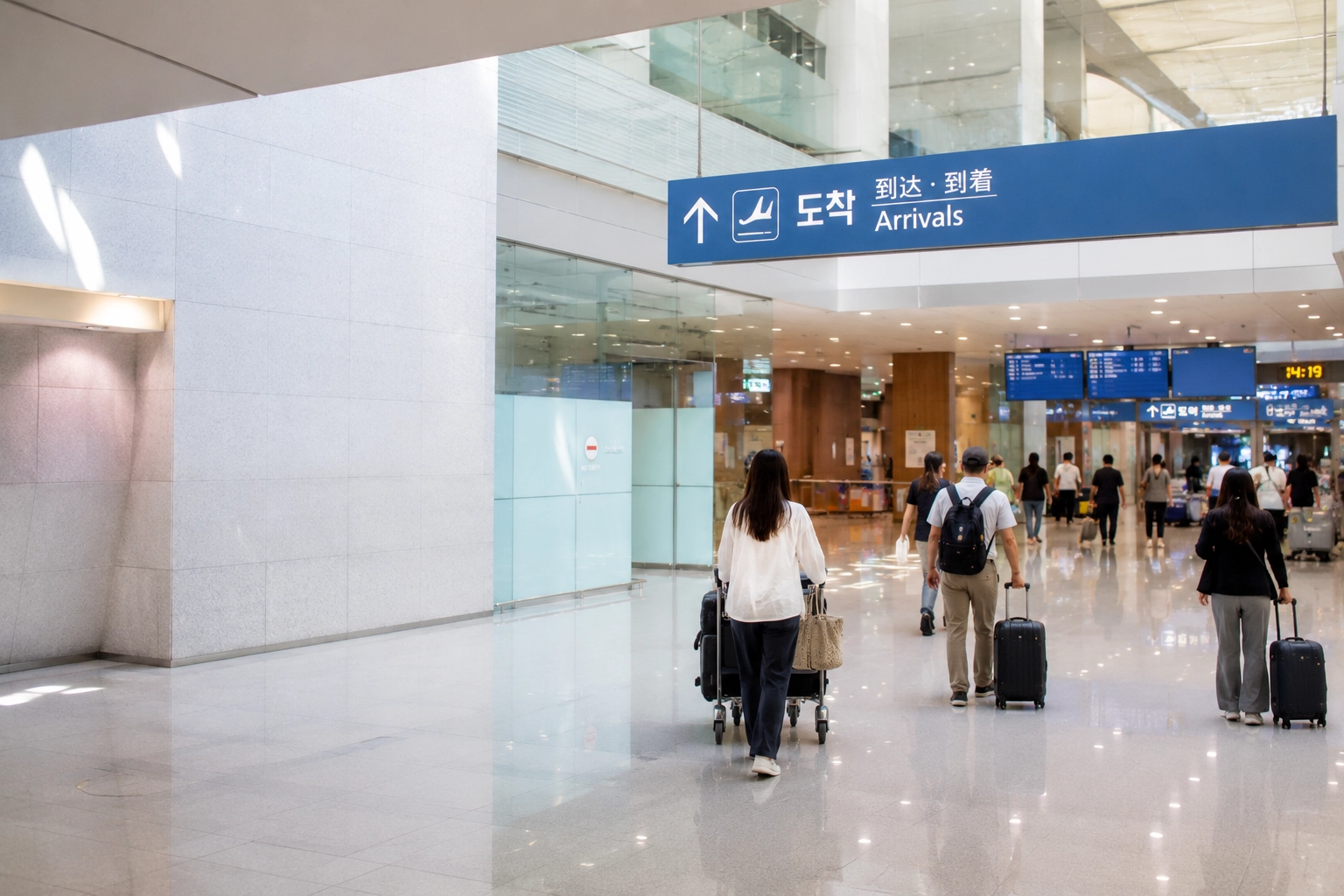
Travelers with luggage walking beneath an Arrivals sign inside Incheon International Airport
Arrivals · Incheon International Airport

Check the Terminal Your Flight Actually Uses

Terminal assignments can change, especially with codeshare flights. Your e-ticket and the airport’s live arrival search are more reliable than a saved airline list.

Entering Korea or Transferring?

Entering Korea

If this is your final flight and you are entering Korea, follow the Arrivals or Immigration signs. The usual sequence is immigration first, checked baggage next, customs after that and then the public arrival hall.

ImmigrationBaggage ClaimCustomsArrival Hall

Connecting to another flight

If you are only connecting at Incheon, follow Transfer or Connecting Flights signs instead of joining the general arrival flow automatically. Your connection can depend on the airline, terminal and whether your checked baggage is transferred through to the next flight.

If anything is unclear, use your airline’s transfer instructions rather than assuming that every connection requires Korean immigration.

From the Aircraft to the Arrival Hall

For travelers entering Korea, the route is usually simple. The walking distance can vary by gate and terminal, but the order of the main steps is the same.

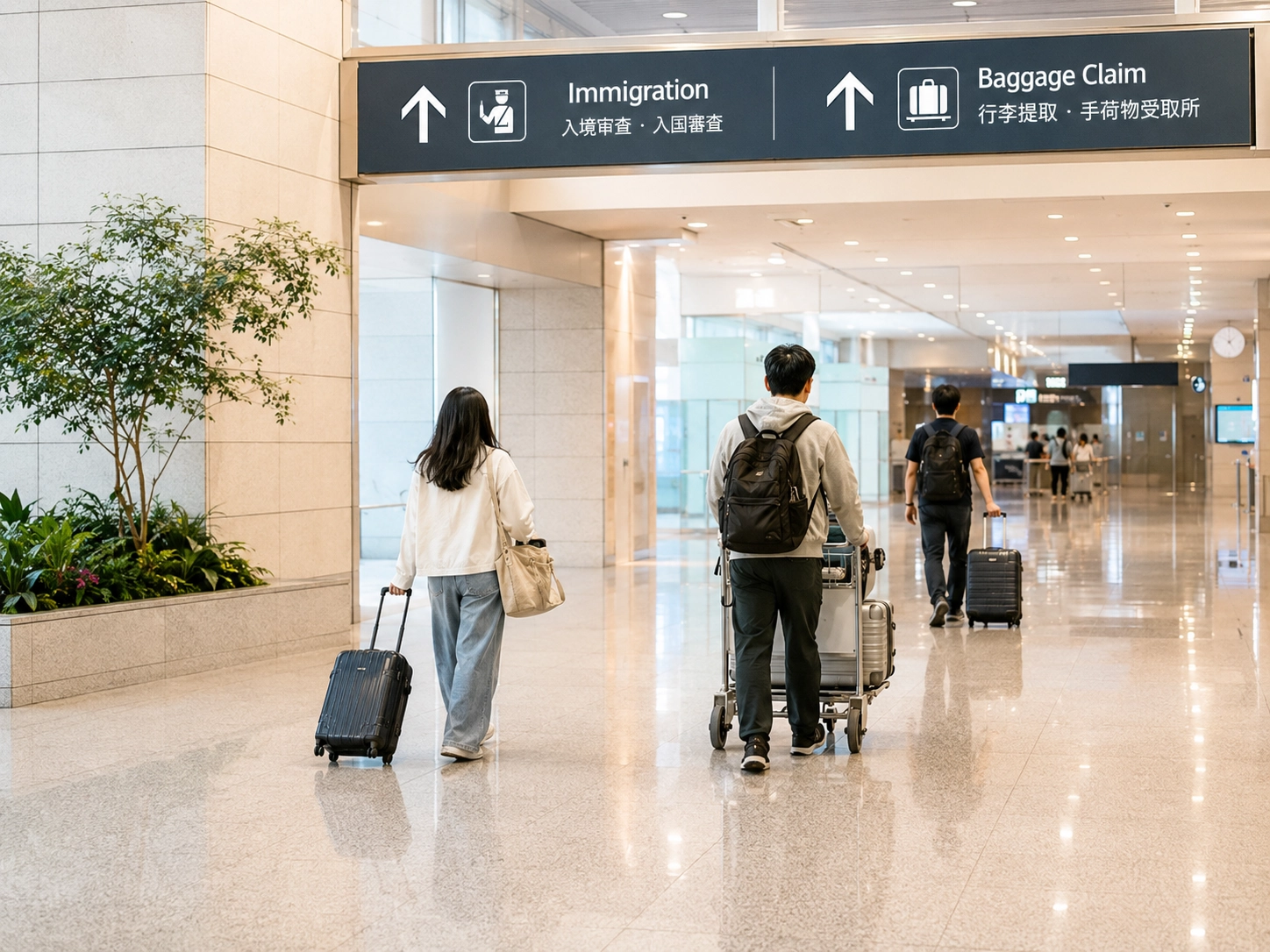
Travelers following Immigration and Baggage Claim signs inside Incheon International Airport
Follow the airport signs in order; your exact walking route depends on the gate and terminal.
  1. Follow the Arrivals Signs

    After leaving the aircraft, follow signs for Arrivals or Immigration. Transfer and Connecting Flights signs lead to a different process, so use them only when you are continuing to another flight.

  2. Immigration

    Have your passport and the entry documents that apply to your own travel status ready. The rules are not identical for every passport, visa or residence status, so check the official Korean guidance before the flight rather than copying another traveler’s checklist.

    K-ETA and the e-Arrival Card are not the same thing

    Korea’s temporary K-ETA exemption for countries already covered by the measure has been extended through December 31, 2026. Being exempt from K-ETA does not automatically mean that you are exempt from the arrival declaration.

    A traveler who holds a valid K-ETA is exempt from the arrival declaration. A traveler using the temporary K-ETA exemption may still need to submit an e-Arrival Card, depending on status.

    The official e-Arrival Card is free and can be submitted within three days before arrival in Korea. The official website also has a navigator that tells you whether you need to submit one.

    The official e-Arrival Card website does not charge a fee. Do not enter payment information on a website claiming to sell the Korean arrival card.

  3. Baggage Claim

    After immigration, check the airport display for the baggage belt assigned to your flight and collect your checked bags before continuing toward customs.

    If your suitcase does not appear, first make sure the belt still matches your flight. If it is genuinely missing or damaged, speak to your airline or the baggage service desk while you are still inside the baggage area. Keep the baggage tag from check-in and your flight details with you.

  4. Customs

    After collecting your baggage, follow the customs signs toward the exit.

    If you are carrying goods that may need to be declared, check Korea Customs rather than relying on rules from another country. Items over the duty-free allowance and restricted goods can require a declaration.

    If you have nothing to declare, follow the appropriate customs channel shown at the airport.

  5. Arrival Hall

    Once you pass customs and enter the public arrival hall, the immigration part of the journey is finished.

    Before heading into the city, you may still need to sort out mobile data, save your Korean accommodation details, check your payment backup or decide how to reach your stay. Those first practical steps are covered separately in the Incheon Airport Arrival Hall Guide.

Terminal 1 and Terminal 2 Are Separate Buildings

You do not need to memorize a fixed list of airlines for each terminal. Check the terminal shown for your actual flight number, then use the map for orientation after landing.

Terminal 1

Terminal 1 is a separate passenger terminal with its own immigration, baggage claim and arrival hall. Follow the signs for the flight you actually arrived on rather than using a saved airline list.

Terminal 2

Terminal 2 has its own arrival facilities and is not connected to Terminal 1 by a public walking route. If you need to move between terminals after entering the public area, use the airport’s current inter-terminal transportation guidance.

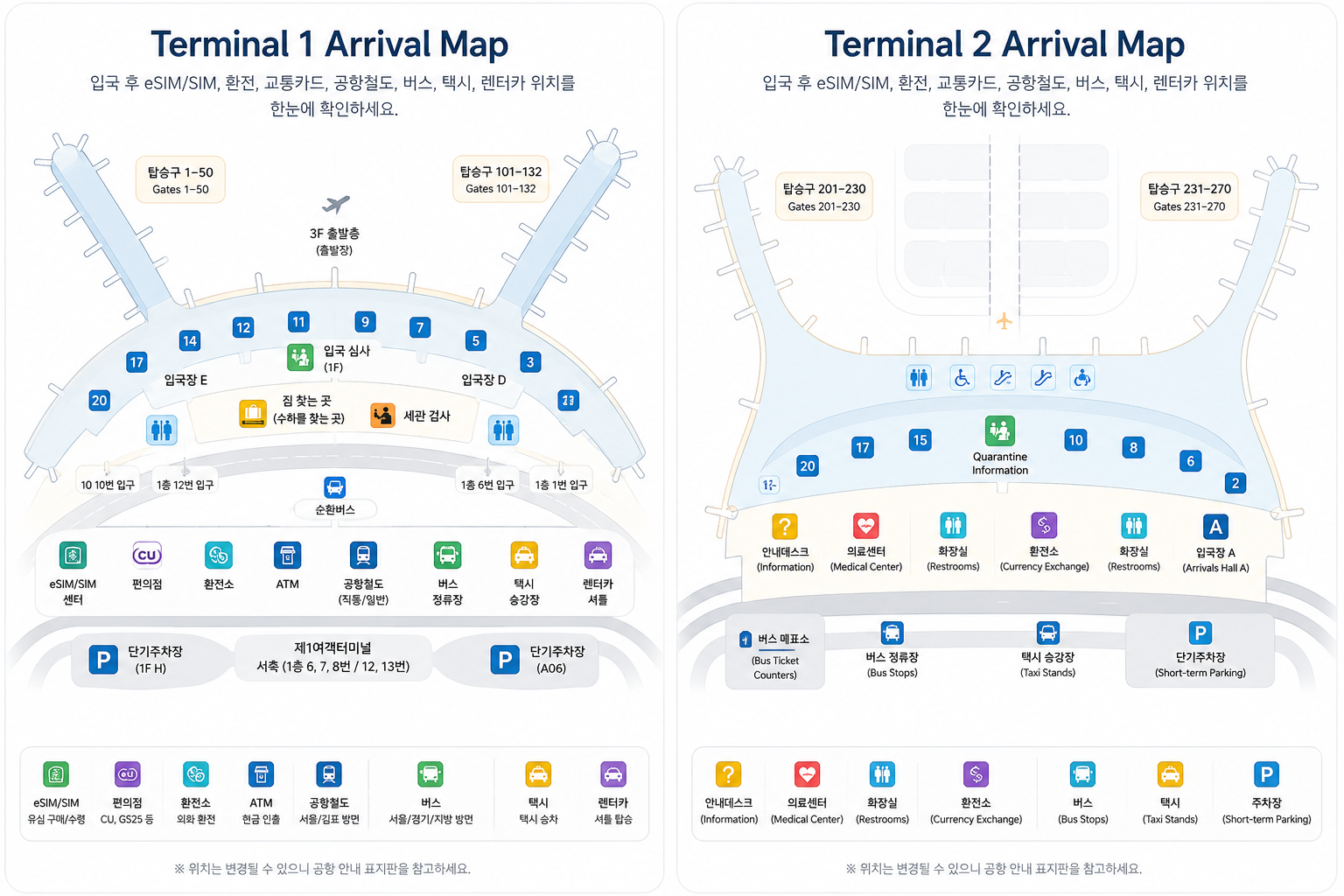
The map is useful for understanding where immigration, baggage claim, customs and the public arrival hall sit in relation to one another. For live gate, belt or facility information, use the airport’s current signs and flight information.

Combined Incheon Airport Terminal 1 and Terminal 2 arrival maps showing immigration, baggage claim, customs, arrival halls, transport and service locations
Terminal 1 and Terminal 2 arrival maps. Use them for orientation; live airport signs and flight information take priority. Open the terminal map at full size

You’re Through — What Happens Next?

Once you are in the public arrival hall, the entry process is behind you. What matters next depends on the trip: getting your phone online, keeping the accommodation address in Korean, having a payment backup and choosing a route that still works with your luggage.

Continue with the Incheon Airport Arrival Hall Guide for those first practical steps.

If your only remaining question is how to reach your accommodation, the Airport Transfer Guide compares AREX, airport bus, taxi and pre-booked transfer by the whole door-to-door journey.

Incheon Airport Arrival FAQ

How do I know whether my flight arrives at Terminal 1 or Terminal 2?

Check your e-ticket or search your flight number on the official Incheon Airport arrival page. That is safer than relying on a fixed airline list, particularly for codeshare flights.

Do I go through immigration before collecting my baggage?

Yes, if you are entering Korea. The usual order is immigration, baggage claim, customs and then the public arrival hall. Passengers connecting to another flight should follow Transfer or Connecting Flights signs and their airline’s instructions instead.

What should I do if my baggage does not arrive?

First check that the baggage belt still matches your flight. If the bag is missing or damaged, contact your airline or the baggage service desk before leaving the baggage area, and keep your baggage tag and flight details ready.

Can I walk between Terminal 1 and Terminal 2?

No. Terminal 1 and Terminal 2 are separate buildings without a public walking route between them. If you need to change terminals in the public area, use the airport’s official inter-terminal transportation guidance.

Which transport should I choose from Incheon Airport to Seoul?

Make that decision after you reach the public arrival hall. The best option depends on the exact accommodation, arrival time, luggage and group size. The separate Airport Transfer Guide compares AREX, airport bus, taxi and pre-booked transfer by the full journey to your stay.

What should transfer passengers do?

Follow Transfer or Connecting Flights signs and your airline’s instructions. Confirm the connection terminal, available connection time and whether checked baggage is transferred through to the next flight instead of assuming that you should follow the general immigration route.

Official Sources

Entry rules and airport operations can change. Use these official sources when a detail affects your own trip.